_edited.png)
Explore Artistic Pen Drawings and Charcoal Works
Art has the remarkable ability to express emotions, tell stories, and capture moments in time. Among the various mediums available to artists, pen drawings and charcoal works stand out for their unique qualities and versatility. In this blog post, we will explore the intricacies of these two artistic forms, their techniques, and how they can be utilized to create stunning pieces of art.
Understanding Pen Drawings
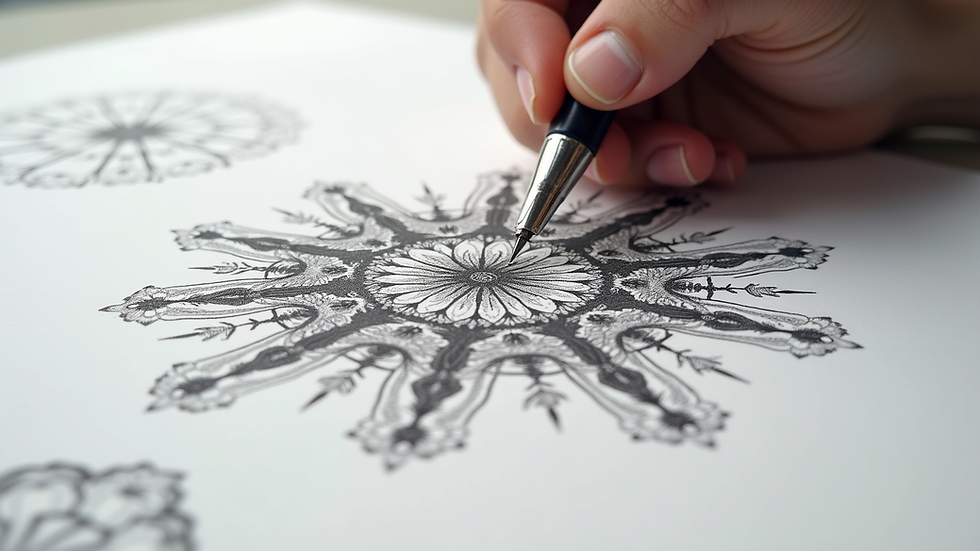
Pen drawing is a technique that utilizes ink pens to create images. This medium allows for precision and detail, making it a favorite among many artists. Here are some key aspects of pen drawings:
Types of Pens Used
Ballpoint Pens: These are commonly used for sketches and doodles due to their availability and ease of use.
Fountain Pens: Known for their smooth ink flow, fountain pens are ideal for detailed work and calligraphy.
Fineliner Pens: These pens come in various tip sizes, allowing for both fine details and broader strokes.
Techniques in Pen Drawing
Hatching: This involves drawing closely spaced parallel lines to create shading and texture.
Cross-Hatching: By layering lines in different directions, artists can achieve a richer depth and dimension.
Stippling: This technique uses dots to create shading and texture, allowing for a softer appearance.
Famous Pen Artists
Several artists have made significant contributions to the world of pen drawing. For example, M.C. Escher is renowned for his intricate designs that often feature impossible constructions and tessellations. His use of pen and ink showcases the medium's potential for detail and complexity.
The Allure of Charcoal Works
Charcoal is another powerful medium that has been used for centuries. It offers a different texture and feel compared to pen drawings. Here’s what you need to know about charcoal works:
Types of Charcoal
Vine Charcoal: Made from burnt twigs, vine charcoal is soft and easy to erase, making it perfect for sketching.
Compressed Charcoal: This type is denser and produces darker lines, ideal for creating bold contrasts.
Charcoal Pencils: These provide more control and precision, suitable for detailed work.
Techniques in Charcoal Drawing
Blending: Artists often use their fingers or blending stumps to smooth out the charcoal, creating soft transitions between light and dark areas.
Lifting: By using an eraser, artists can lift off charcoal to create highlights, adding depth to their work.
Layering: Building up layers of charcoal can create rich textures and tones, enhancing the overall impact of the piece.
Notable Charcoal Artists
One of the most famous charcoal artists is Pablo Picasso, who used charcoal in many of his sketches and studies. His ability to convey emotion and movement through this medium is a testament to its expressive potential.
Combining Pen and Charcoal
While pen drawings and charcoal works are often seen as distinct, many artists choose to combine these mediums to create unique pieces. The contrast between the sharp lines of pen and the soft textures of charcoal can lead to striking artwork.
Techniques for Combining Mediums
Layering: Start with a charcoal base and add pen details on top. This can create a dynamic interplay between the two mediums.
Contrast: Use pen to outline shapes and charcoal to fill in shadows, enhancing the overall depth of the piece.
Mixed Media: Incorporate other materials, such as watercolor or pastels, alongside pen and charcoal for added dimension.
Practical Tips for Artists
Whether you are a beginner or an experienced artist, here are some practical tips to enhance your pen and charcoal drawing skills:
For Pen Drawings
Practice Regularly: The more you draw, the better you will become. Set aside time each week to practice different techniques.
Experiment with Different Pens: Try various types of pens to find the one that suits your style best.
Study Other Artists: Analyze the work of established pen artists to understand their techniques and approaches.
For Charcoal Works
Use Quality Paper: Invest in good-quality paper that can handle charcoal without smudging or tearing.
Keep Your Tools Clean: Regularly clean your blending stumps and erasers to maintain the quality of your work.
Don’t Be Afraid to Make Mistakes: Charcoal is forgiving, so embrace the process and learn from your errors.
Conclusion
Exploring the world of pen drawings and charcoal works opens up a realm of creative possibilities. Both mediums offer unique qualities that can enhance your artistic expression. Whether you choose to work with the precision of pen or the softness of charcoal, the key is to practice and experiment.
As you embark on your artistic journey, remember to embrace your unique style and let your creativity flow. The world of art is vast, and there is always something new to discover. So grab your pens and charcoal, and start creating!


Comments